location: Lot-et-Garonne, France
type: adaptive reuse, private residential
date: 2025
key materials: stone, earth and fibers
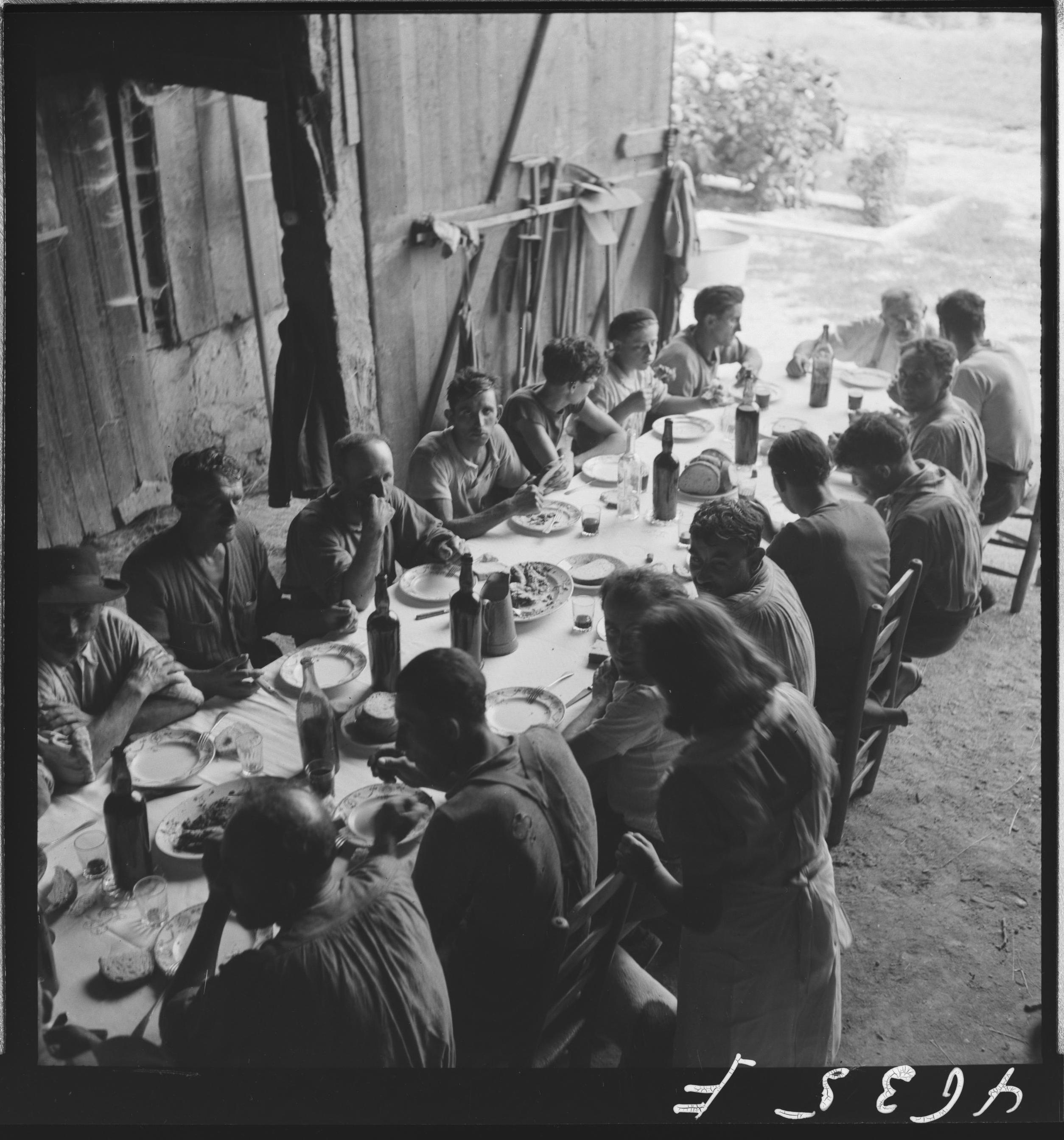
Archive pictures: André Zucca,Un mois chez nos paysans gascons, 1940.
The barn is part of a maison forte, a fortified house overlooking the vineyards, dating approximately to the 17th century. Its owner had long imagined transforming the ruin into a small dwelling for himself and his wife: a place to retreat to on weekends without having to open up and inhabit the much larger main house.
The project began with a study of regional barn typologies and traditional stone houses across southwest France. The title refers to bòrda, the Gascon term for a rural agricultural building or farmstead, a word historically associated with the vernacular structures that shaped the region’s rural landscape. Searching for traces of how similar rural structures had once been occupied, we came across André Zucca’s 1940 photographic reportage Un mois chez nos paysans gascons (A Month with our Gascon Farmers).
The image suggested another history of these buildings. Even when fully embedded in the agricultural economy, the barn was not only a place of work or storage; it could also become a dining room, a gathering place, a temporary space of collective life. In this sense, the proposed transformation of the ruin into a small dwelling is less a radical change of use than another moment in the barn’s long history of being inhabited.
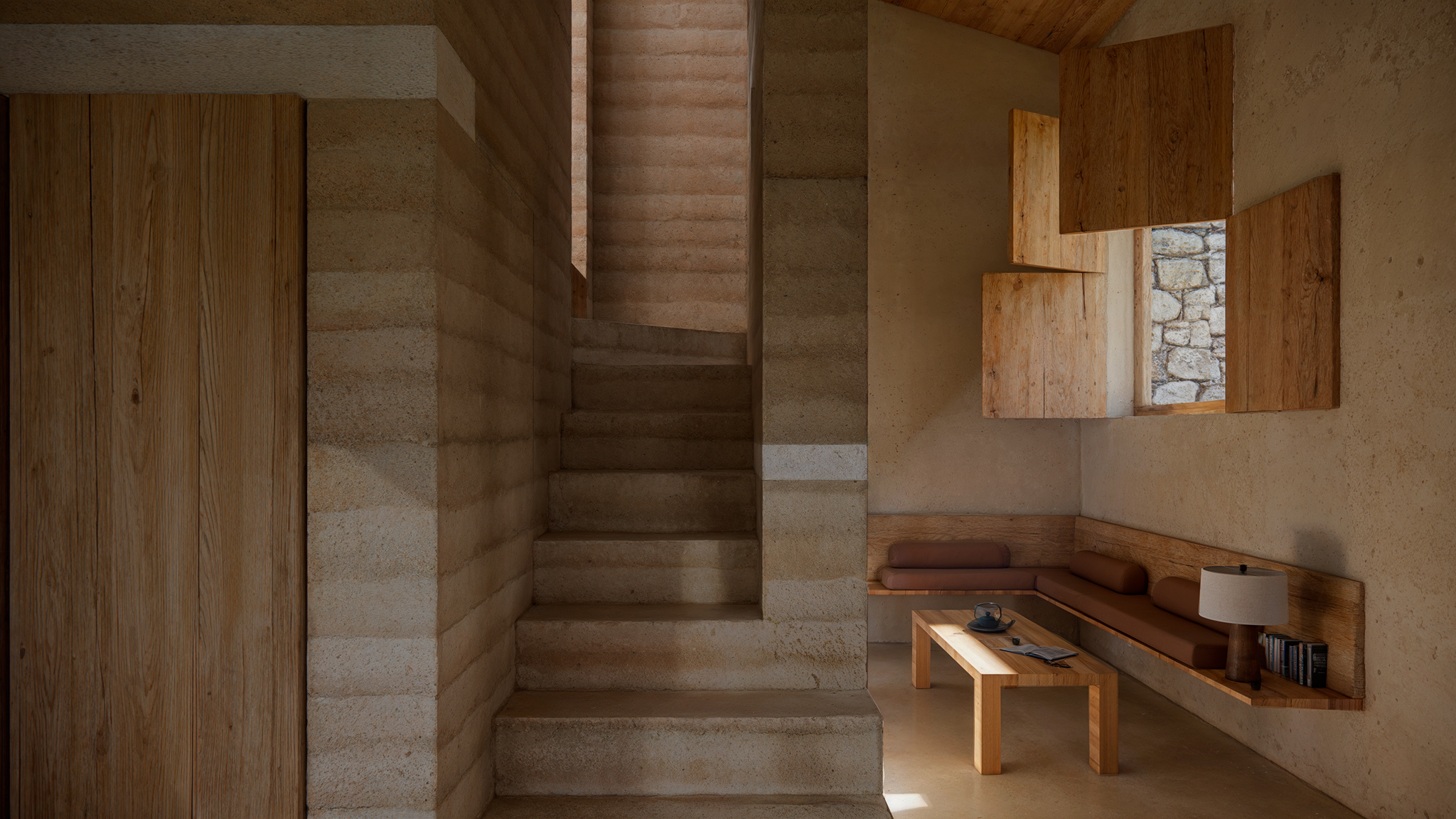
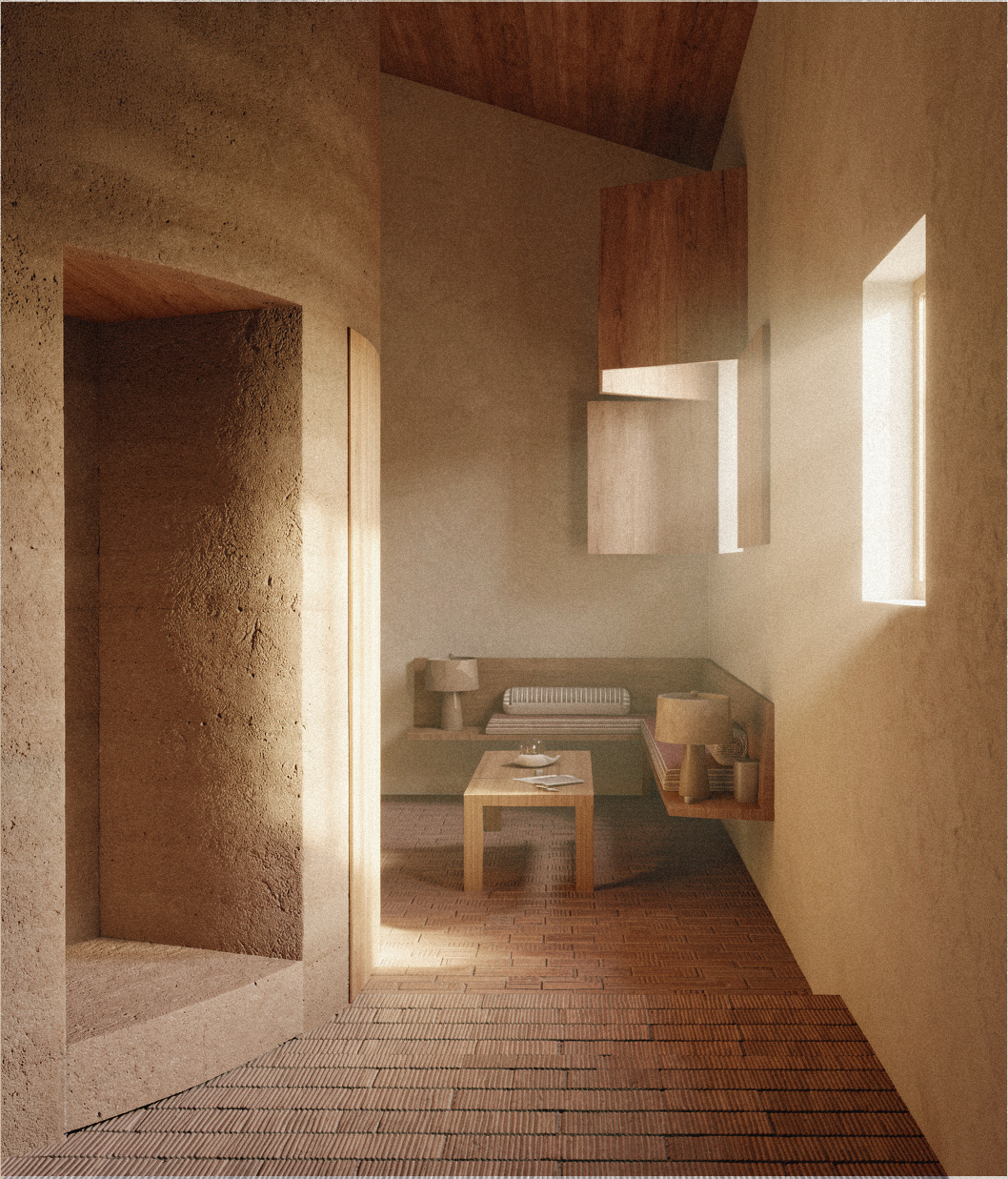
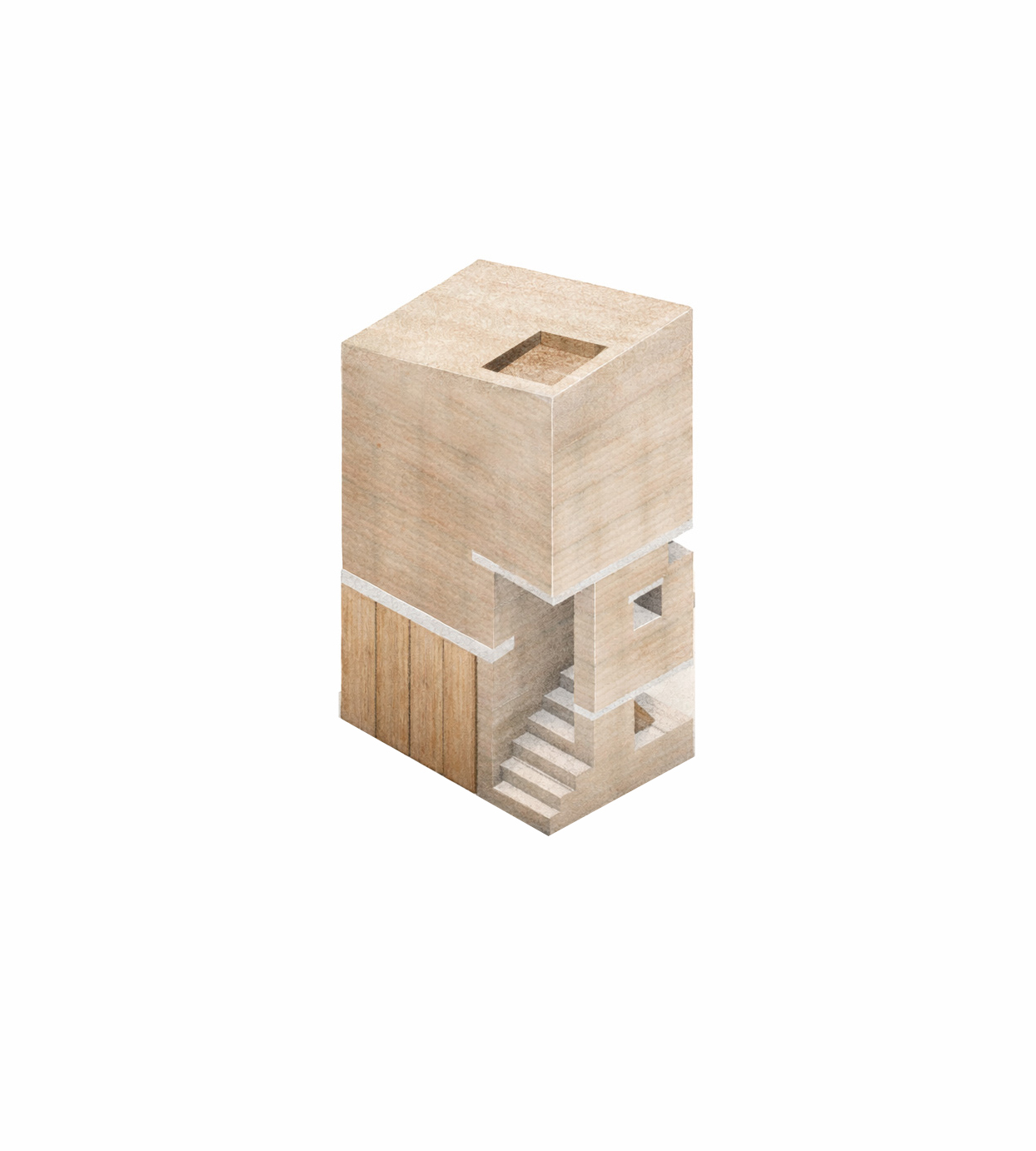
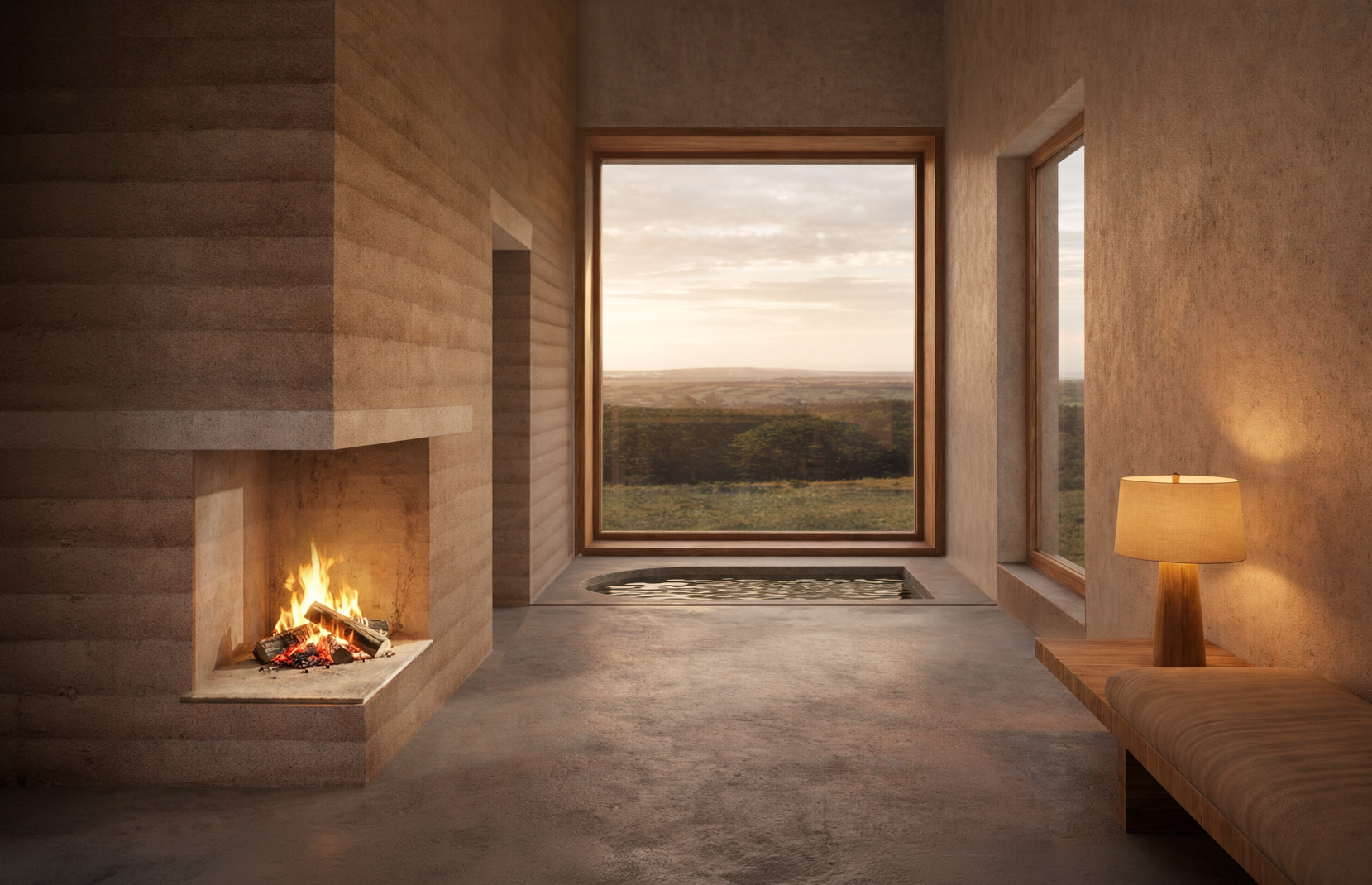
The design seeks to preserve the existing stone shell and maintain the building’s rural character. Repairs are conceived using traditional materials, while new elements are inserted with restraint and remain clearly legible against the historic fabric. The domestic programme is organised as a rammed earth volume within the restored enclosure, allowing the original proportions of the barn to remain perceptible.
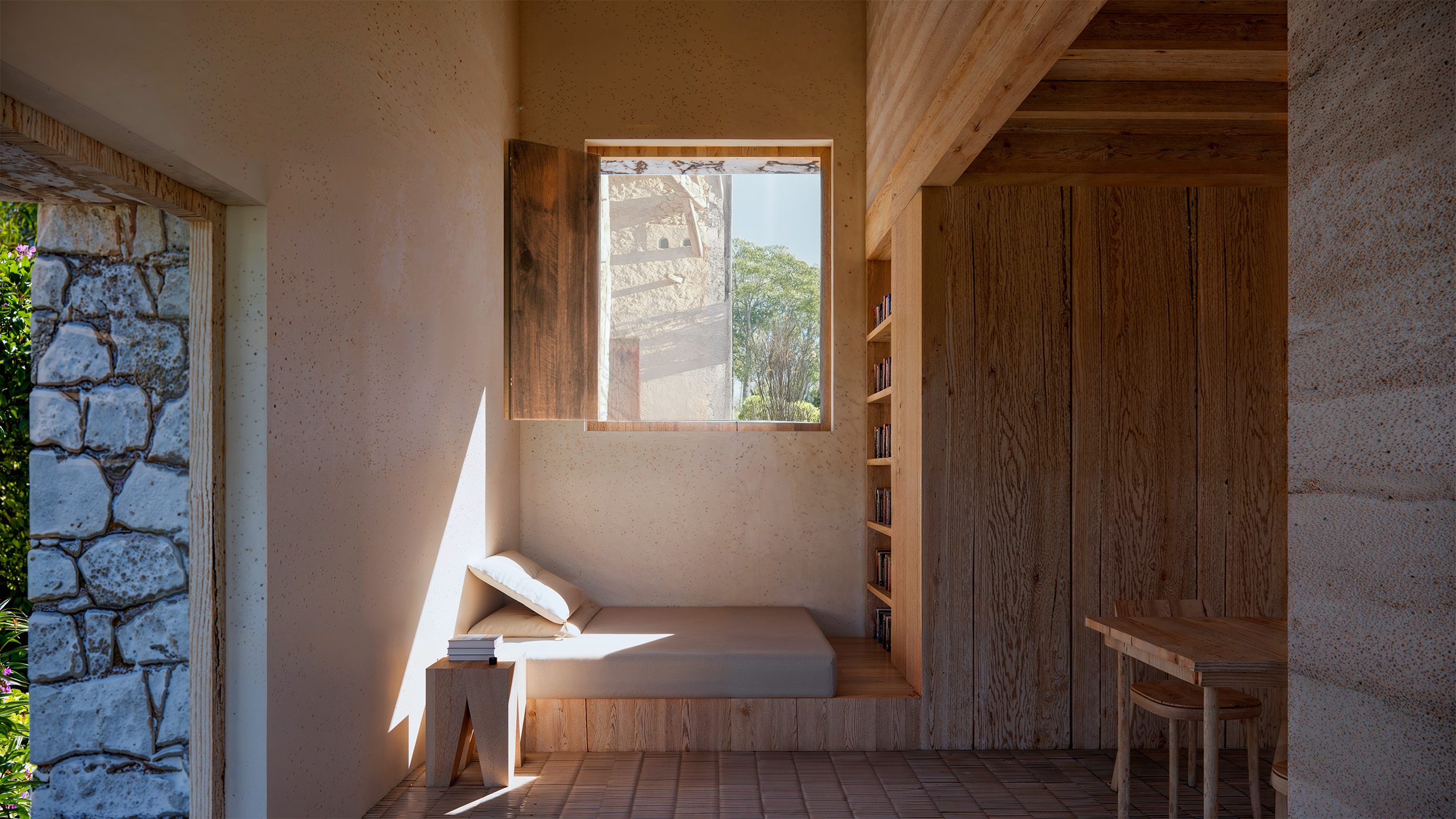
Large openings reconnect the interior with the surrounding vineyards and landscape, while the dwelling is intentionally modest in scale: a place for retreat, shared meals, reading, and seasonal occupation. More than a conversion, the proposal is conceived as a careful continuation of a rural structure whose capacity to host everyday life had never entirely disappeared.